Total Pageviews

Thursday, August 20, 2026

Photograph of Samuel Brooks the Lighthouse Keeper?

Samuel Brooks (1789-1856), the lighthouse keeper and friend of Edward Lloyd Parry, migrated with his wife Emma Blinstone Brooks by handcart to Utah in 1856. Emma died in Nebraska, and Samuel died a few days after arriving to Utah, orphaning their three children, Mary, George, and Frank.

Edward Lloyd and Elizabeth Evans Parry subsequently adopted George. Edward and Elizabeth's son Edward Thomas Parry and his wife, Charlotte, had a daughter named Winnifred Parry. George and his wife, Emily, had a son named Samuel Brooks Sr. Samuel Sr. and Winnifred married in 1919.

This photo claims to be "Samuel Brooks, grandfather of Will Brooks." It can be found in the Juanita Brooks Photograph Collection

Up until today, I had never seen nor even heard of the existence of a photograph of him. 

Is this really him? If it is, it is an extraordinary find and priceless to our family!

-----------------------------------

P.S. My older brother posted this video on the same day that I found the alleged picture of Samuel Brooks the lighthouse keeper. I cannot view this as a coincidence, but God moving in His mysterious ways.  

-----------------------------------

P.P.S.

Subsequent comments from relatives about the picture:

It's a wonderful picture. That man has such a kind and gentle face. I wish it is a photo of our great, great grandfather, lighthouse keeper, and handcart pioneer...but I don't believe it is. 

His style of dress seems all wrong to me. His vertical tie (rather than a fluffy cravat or large bow), that's white not black, tied in a loose four-in-hand knot, tucked into a vest that's tailored with a high-on-the-chest V opening was more characteristic of the 1880s and 1890s than of the 1850s.

Also, compare photos of men's haircuts in 1850s vs haircuts toward the end of the19th and early 20th centuries - they tend to get progressively shorter and tidier as the 19th century ends.

Moreover -- though I admit my next observation is extremely thin evidence indeed -- he doesn't look like George or Frank Brooks at all. Perhaps they looked more like mom than dad? ...

Samuel Brooks or Brookes was not an uncommon name in Britain. If this man is named Samuel Brooks, is it possible that Juanita, or whoever found this photo, found the wrong guy with the right name? [My wife] has been vigorously digging into our genealogy lately -- she's at the genealogy library almost every day, ... We've been amazed at how many mistakes like this have turned up that [she] has had to correct -- similar names at similar times and places that are wrong turns and strange coincidences. 

Again, it would be GREAT if this is him, and I hope it is him, but he seems to be about 30 or 40 years out of place to me.

...on the other hand (no pun intended) there is one tiny detail in this photo that is rather eerie and startling to me -- his hand! 

The way he is holding his relaxed hand looks EXACTLY how my dad's relaxed hand looked - to a degree that's almost creepy. 

Is that just my wishful imagination projecting something onto this photo that isn't there?

...okay, you've got me hooked! 

There's one way to know for almost certain...go to the archive and examine the actual physical artifact.

A skilled archivist would be able to look at the original document, identify the type of paper it's printed on, the photographic process that was used, deduce the quality of camera lens that could render that degree of clarity, etc., which could predict the decade in which it was taken.

I think I'm going to walk over to the Marriott Library and ask an archivist to show it to me.

--------------------------------------

We also uploaded the picture to Chat GPT for analysis, and this is what it said:

This black-and-white portrait features physical, stylistic, and photographic elements that pin down its likely origin, period, and unique details.

Estimated Era

Timeframe: 1890s to early 1910s (Circa 1895–1905).

Fashion Clues: The subject wears a standard late-Victorian or Edwardian dark three-piece suit (jacket, vest, and trousers) paired with a high standing collar and white cravat/ascot.

Grooming: His trimmed beard with an unclipped mustache was a classic look for mature gentlemen in the 1880–1900 period.

Photographic Format & Mount

Oval Mat opening: Oval cutout mounts set into textured paper or cardboard cardstock became immensely popular in home portraiture from the mid-1890s into the turn of the century.

Medium: Most likely a silver gelatin or collodion print mounted on a dark textured cabinet card or photo album matting.

Key Identifying Marks

Pocket Watch Chain (Albert Chain): Visible looped across his vest, indicating a pocket watch stored in the vest pocket—a hallmark of formal male attire of the era.

Walking Cane / Crutch Handle: He holds a T-bar or curved handle cane/walking stick directly in front of him. Given the distinct T-shape handle, it appears to be a customized mobility cane or a classic bone/horn T-handle cane.

Right Hand Pose: His resting, slightly clenched right hand rests prominently near the cane, a deliberate posing choice standard in studio studio portraiture to convey stability or status.

Location

Region: Highly typical of portrait studios in North America (United States / Canada) or Western Europe (especially Great Britain or Germany).

Setting: Studio portrait; the neutral, slightly painted dark background behind him is standard indoor photography backdrop for the late 19th century.


Sunday, December 15, 2024

Juanita Brooks Historical Preservation Society

Edward Lloyd Parry and Elizabeth adopted and raised George Brooks (1845-1930). One of George's sons, Will (1881-1970), married the renowned Southern Utah historian Juanita Brooks. 

Here is a website that explains the Juanita Brooks Historical Preservation Society. I encourage you to join!


Friday, August 7, 2020

Deed to Manti Property 1880

This two-page document, just uploaded to FamilySearch, details the transaction of the Shomaker home in Manti to Edward Lloyd Parry in 1880. (Click on the photos to enlarge.)


Sunday, May 3, 2020

Recent Pictures of the St. George Temple Renovation

Edward Lloyd Parry served as master stonemason of the St. George Temple from 1871-1877. Considering how closely he and his family worked on and sacrificed for this building, it has been dear to his descendants ever since. 

Now, 143 years later, renovation will give new life to the oldest operating temple of the Church of Jesus Christ of Latter-day Saints. Here are some recent pictures that expose the back side of the temple, where workers have stripped away exterior walls, revealing the original exterior.

On the bottom right-hand door (or window?) of the first photo, one can clearly see some of the original red sandstone exterior, prior to its being covered over with the familiar white plaster.


Friday, March 13, 2020

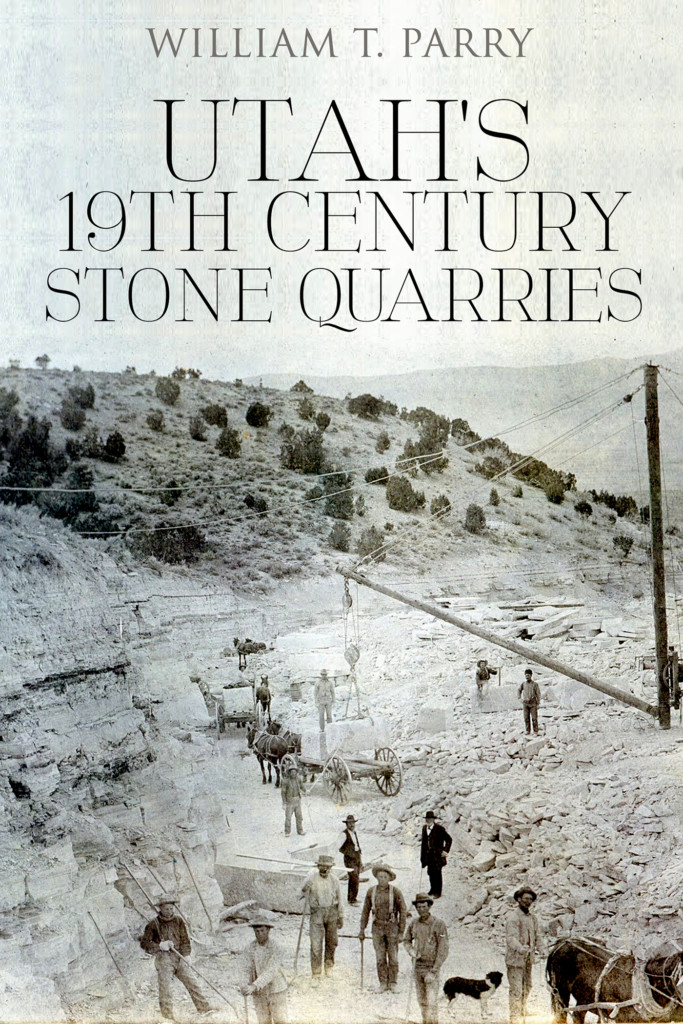
Utah's 19th Century Stone Quarries, by William T. Parry

Check out this new book, Utah’s 19th Century Stone Quarries, by William T. Parry. Bill is a direct descendant of ELP and a professor emeritus of geology and geophysics at the University of Utah. ELP is standing among others on the front cover of the book.

Image result for Utah’s 19th Century Stone Quarries by William T. Parry


Tuesday, September 10, 2019

Joseph Parry Biographies

To download a PDF of the Joseph Parry biographies, click here.

Saturday, May 18, 2019

Samuel Brooks (1789-1856), friend of Edward Lloyd Parry

This video shows the lighthouse at the Point of Ayr in Talacre, North Wales, where Samuel Brooks (1789-1856) worked as its lighthouse keeper from 1825 to 1856, prior to migrating to Utah as a Mormon pioneer. 

When Samuel Brooks and his wife, Emma Blinstone Brooks (1807-1856) joined the Church of Jesus Christ of Latter-day Saints in 1848, their life would never be the same. Determined to be with their fellow saints in Zion, including their friends Edward Lloyd and Elizabeth Evans Parry, Samuel and Emma and their three children (Mary Elizabeth (1839-1919), George (1845-1930), and Francis “Frank” (1849-1913)) left their life in Wales behind and migrated to Utah in 1856. When the family arrived in Winter Quarters, Nebraska, Emma died of illness. Now a widower, Samuel continued on with his children, who joined the Edward Bunker Handcart Company. On the day he and his children entered the Salt Lake Valley on October 5, 1856, Samuel also died, orphaning his three children in a strange new land. 

Samuel’s three children were farmed out to other families in Utah, with then 11-year-old George being adopted by fellow Welshmen Edward Lloyd and Elizabeth Parry.

Monday, May 6, 2019

ELP sites in UK and Wales

Just last month my family and I toured a few sites in England and Wales that pertain to the history of Edward Lloyd Parry. Most notably, we were able to find the little village of St. George, Denbighshire, Wales, where ELP was born 25 August 1818. There is a parish church there, which is the highly probably spot of his christening. 

In addition, we visited the city of Chester in England, where ELP married Elizabeth Evans in 1846. 

Finally, while touring the town of Abergele, we came across the meeting house (now the Bull Hotel) on Chapel Street where ELP served as a branch president in 1851. All of the aforementioned is presented in this video that I filmed and narrated:


Wednesday, September 26, 2018

More Pictures from the ELP Reunion


Here are more pictures taken from the ELP Reunion last August 25th. Enjoy!


Parry Brothers Quarry - More Pictures


A couple of weeks ago I posted about how to get to the Parry Brothers Quarry in north Ephraim. Here are some more pictures of the actual quarry and vicinity. (Click on the first picture to enlarge and then scroll through the rest.)


Saturday, September 8, 2018

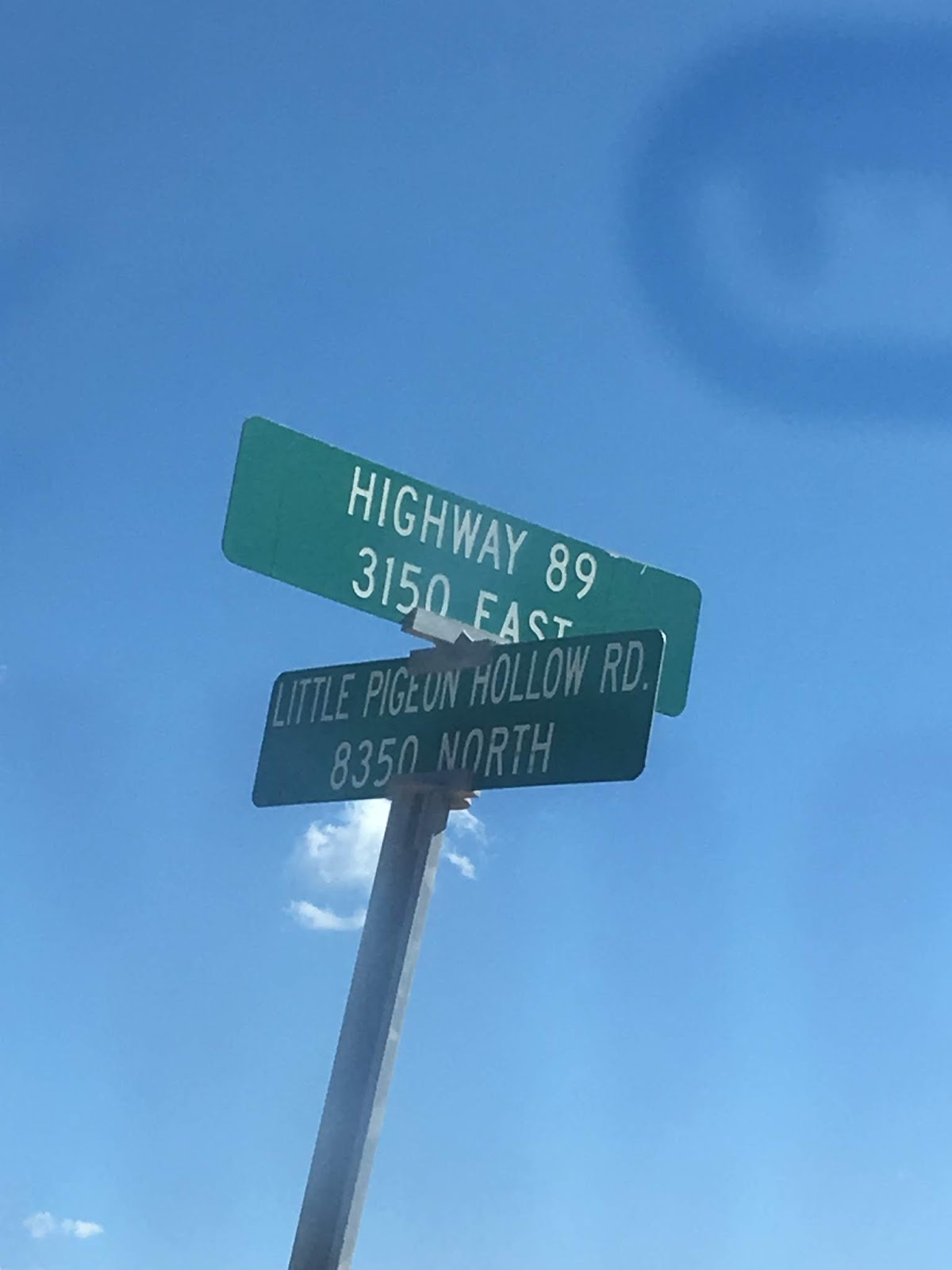
Parry Brothers Quarry: How to get there

My brother visited the Parry Brothers Quarry (near Ephraim) after the reunion on August 25, 2018. Here is how you get to the quarry:
  1. Head north on 89 leaving Ephraim.
  2. Turn right on Little Pigeon Hollow Road (about 1.3 miles past Walmart)
  3. Follow road until "Black Hill Wildlife Management Area" sign.  If you drive past the sign, you will be on gravel road.
  4. Turn right, through a cattle grate and on to dirt road. (NOTE: For this point on it is heavily rutted dirt road.  Your vehicle will need some extra ground clearance.)
  5. Follow the road for almost a mile (.9).  Stick with the main road and wrap around the hill.
  6. At the .9 mile fork, turn right.
  7. Follow road up the little canyon as far as you can.
  8. Stop and walk up the road to the path that turns right along the side of the cut hill.
  9. Walk about .25 mile to the derrick tower (wooden post with cables and pulleys)
 Here are some pictures leading to the quarry:


Edward Thomas Parry home address

Edward Thomas Parry (1859-1938), the second child of Edward Lloyd Parry and Ann Parry, lived at this address:

302 East 200 North
Manti, Utah
 
The home is still standing.

Sunday, August 26, 2018

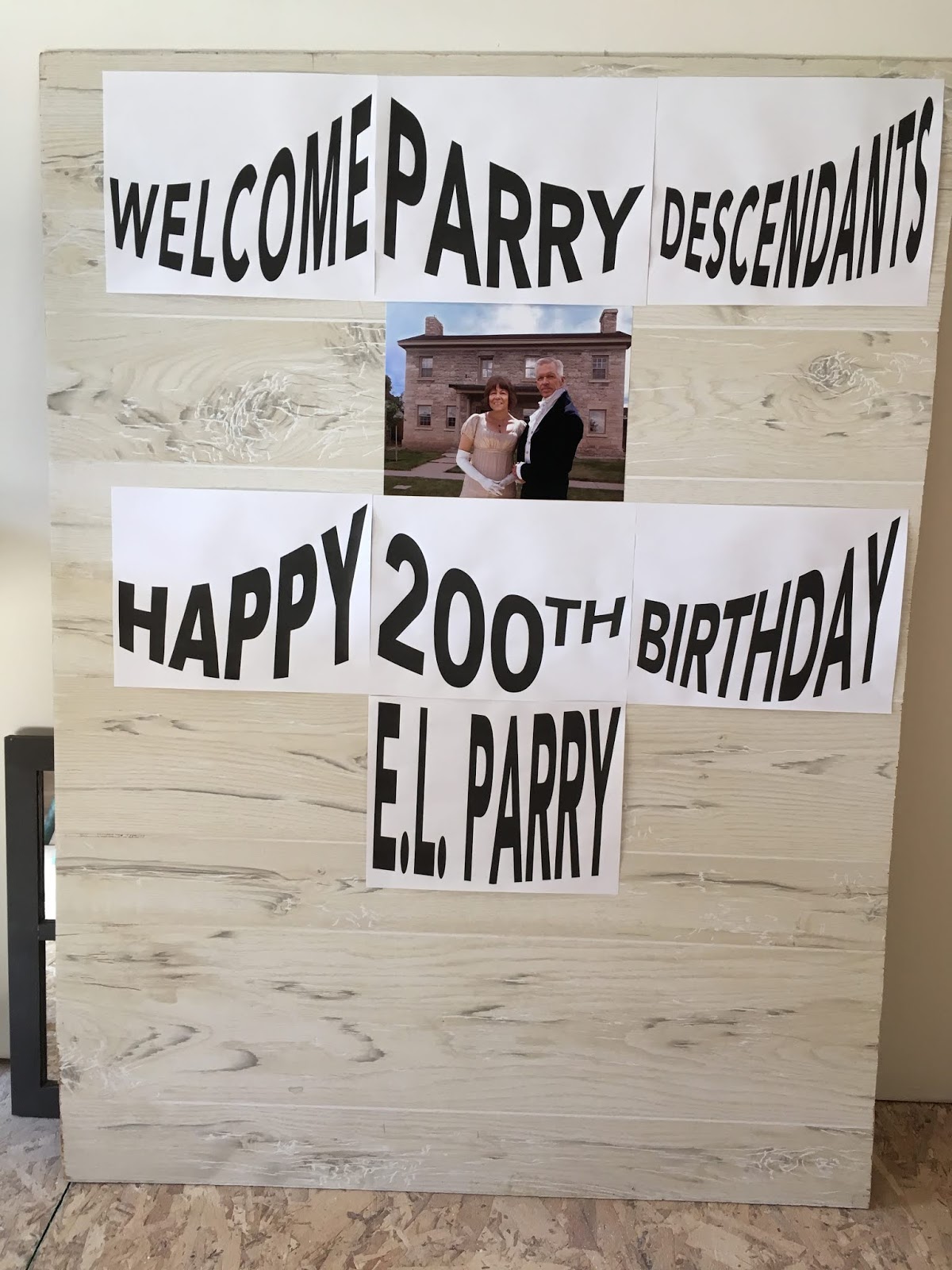
Yesterday's ELP Reunion In Manti

Yesterday we had a fantastic time at the Edward Lloyd Parry reunion, where we commemorated the 200th birthday of this wonderful ancestor of ours. Here are a few pictures of the tour we took of the Edward Lloyd Parry home, which is located at 50 N. 100 W. in Manti. (click on a photo to enlarge it)